


There's a habit most of us have quietly developed over the years. We see something interesting a long-form breakdown of a concept we've been meaning to understand, a technical deep-dive, a research-backed piece on something relevant to our work or life and we save it. The little bookmark tap feels productive. It feels like learning is happening. But it isn't. Not yet.
Most reading lists are graveyards of good intentions. We save with ambition and return with avoidance. And even when we do go back to read, we skim. We lose the thread halfway. We close the tab and move on, retaining maybe 10% of what we read if we're being generous. This isn't a discipline problem. It's a design problem. Reading passively is not the same as learning. Learning requires engagement questions, connections, reflection. And until recently, that kind of active engagement required a lot of deliberate effort on your part. Linkwise is built to change that. Not by doing the thinking for you, but by giving
you AI-powered tools that make active learning the path of least resistance. Here's how.
The Moment You Save a Link, Learning Has Already Begun
Most apps treat the act of saving a link as the end of a workflow. Linkwise treats it as the beginning. When you save a link with Auto AI Insights enabled, Linkwise quietly gets to work in the background. By the time you're ready to open the article, a Quick Insight is already waiting for you a sharp summary of what the piece is about, the key questions it answers, and the core ideas worth paying attention to.
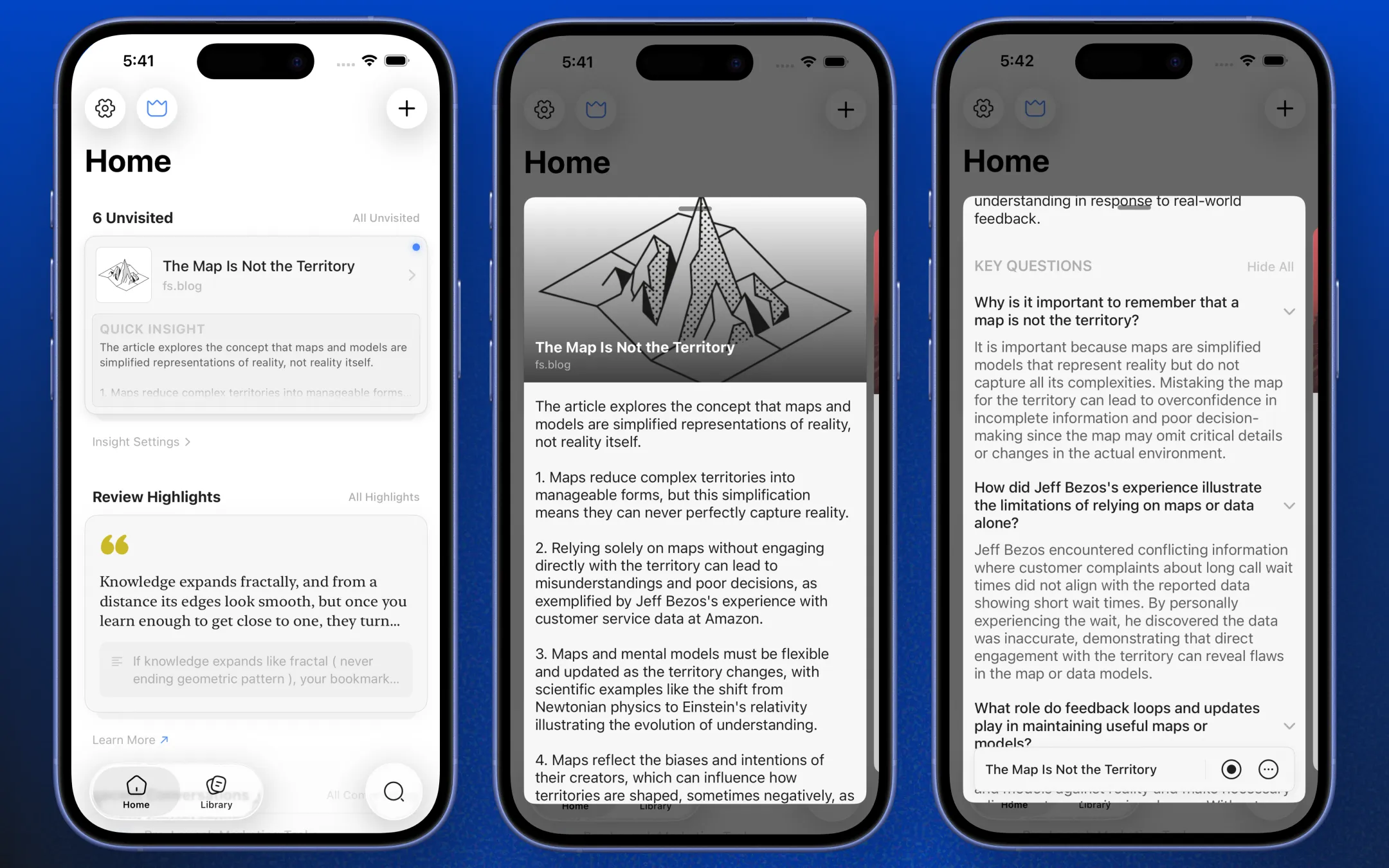
Think of it like a pre-read briefing. Before a surgeon walks into an OR, they've already reviewed the case. Before you read a dense article, Linkwise gives you the map. This does two powerful things. First, it removes the intimidation factor you know what you're walking into before you start. Second, it primes your brain. When your mind has a framework ready, it absorbs the content instead of just scanning it. You didn't have to do anything extra. You just saved a link.
Every Article Has a Private Tutor Built Into It
Reading is a one-way conversation. The author speaks. You receive. You can't ask a question, push back on a claim, or ask for a simpler explanation of a concept that flew over your head. Until now. With Linkwise's Chat with Link feature, every article in your library becomes an interactive conversation. You open a saved link, tap into the AI chat, and you can ask anything, directly grounded in that specific article's content.
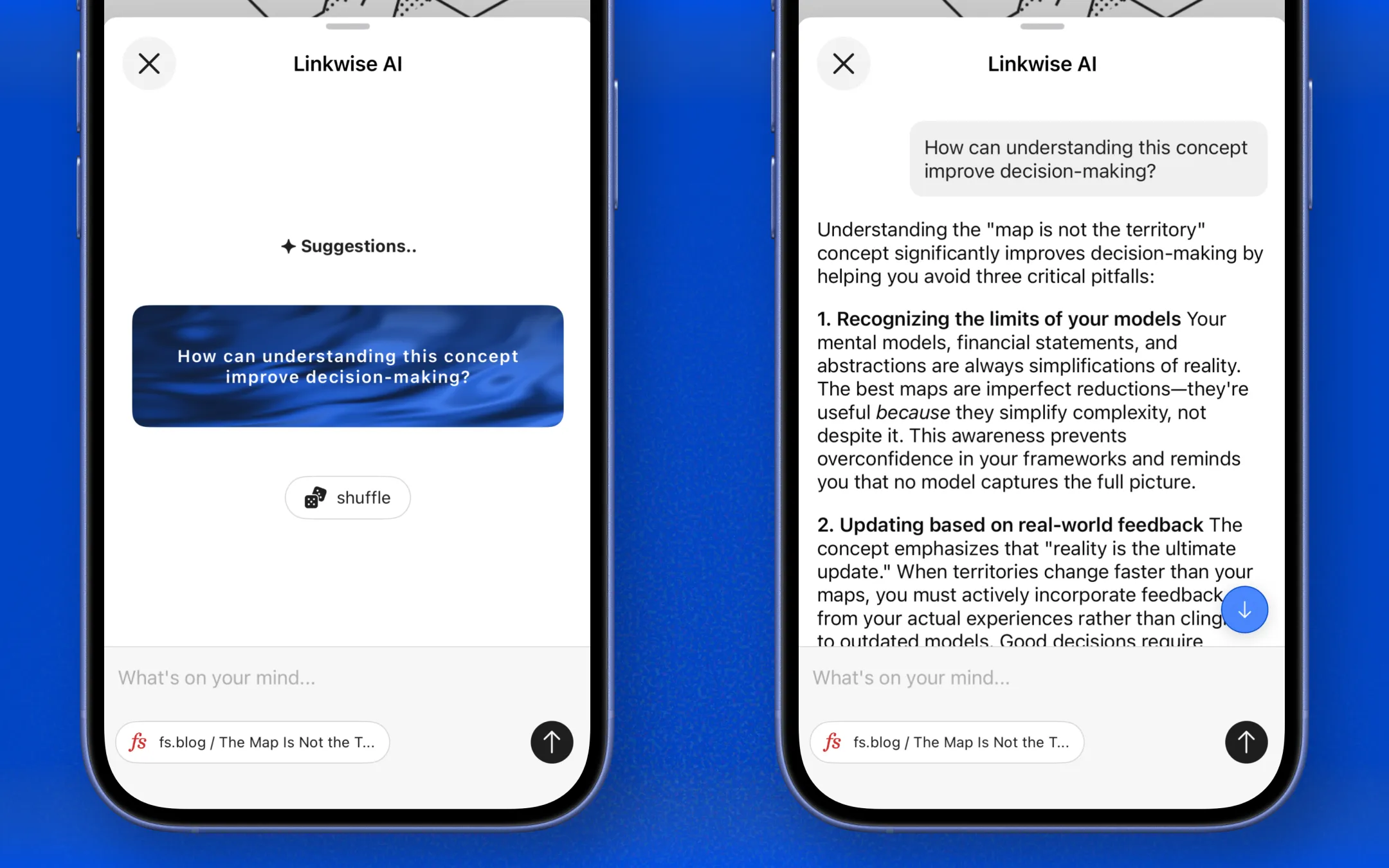
Ask it to explain a paragraph you didn't understand. Ask it to summarise the argument in three bullet points. Ask it to challenge the author's key claim. Ask it to connect the idea to something you already know.
"What's the practical takeaway from this for someone who's just starting out?"
"The author mentioned X - can you expand on what that actually means?"
"Give me three questions I should be thinking about after reading this."
This is the difference between reading an article and studying it. The AI doesn't replace your thinking it responds to it, deepens it, and keeps you engaged.
Your Highlights Become Part of the Conversation
Here's where it gets particularly interesting. Inside Linkwise Reader, you can highlight and annotate any passage while reading. But these highlights aren't just visual markers collecting dust they're active fuel for your learning.
When you're chatting with an article, you can select any text within the piece and append it directly as context to your message. Your question becomes anchored to the exact passage you're thinking about, and the AI responds with surgical precision - not with a generic overview, but with insight tied to that specific fragment of the content.
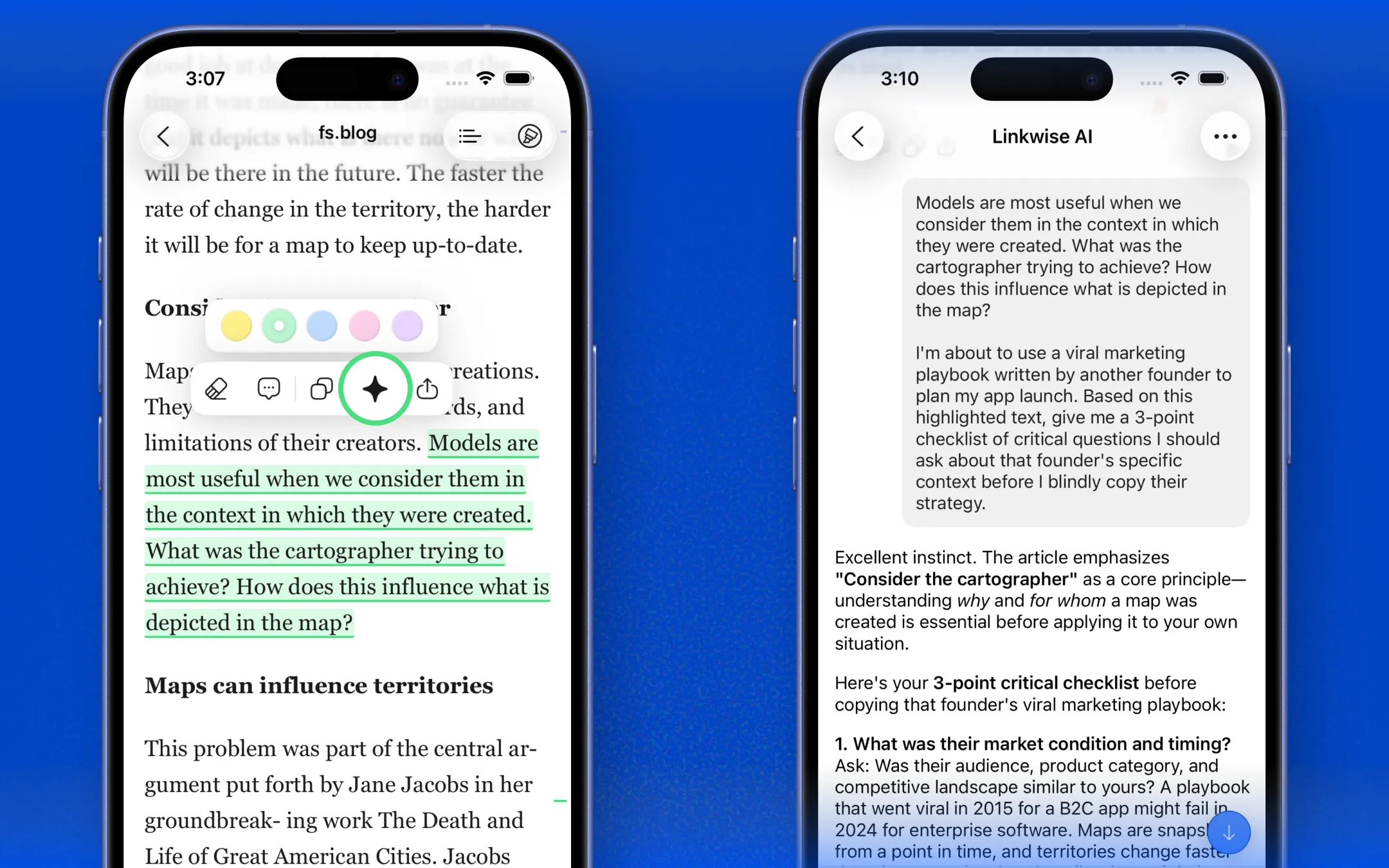
Say you're reading a long piece on cognitive biases. You come across a particular passage about the Dunning-Kruger effect that you want to unpack further. You select it, add it to your chat, and ask: "How does this actually show up in day-to-day decision making?" The AI knows exactly what you're referring to. No vague answers. No off-topic tangents. This feature turns your natural reading instinct the moment you mentally pause and think "wait, what does this mean?" into an immediate, productive dialogue.
Connect the Dots Across Everything You've Read
Individual articles are powerful. But knowledge compounds when ideas from different sources start talking to each other.
Linkwise lets you organise your saved links into Collections a research project, a topic you're studying, a subject you're building expertise in. And with Chat with Collection, you can have a conversation with your entire collection at once.
Here's what makes this especially powerful: when you add a title and description to a Collection, Linkwise feeds that context directly into the AI. It understands the purpose of your collection before you even ask your first question.
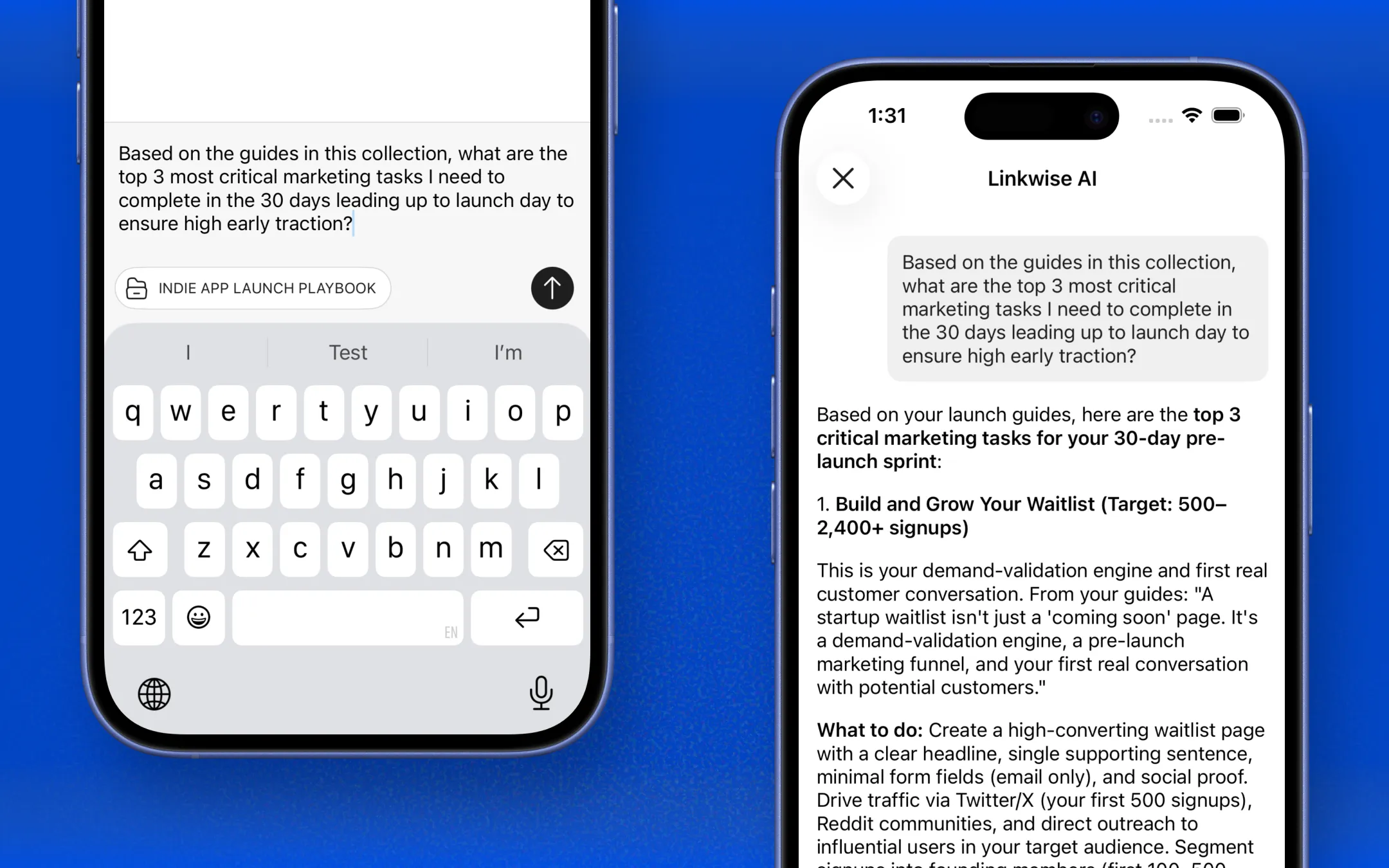
So if you've saved 15 articles about product strategy into a collection called "Product Strategy Fundamentals" with a description like "building my mental models for early-stage product decisions", the AI doesn't treat them as 15 isolated pieces. It understands the thread, and its answers reflect that. You can ask questions like:
"What's the recurring advice across all these articles about when to pivot?"
"Synthesise the different perspectives on prioritisation frameworks from these sources."
"What's missing from my current research? What am I not reading about?"
This is the kind of synthesis that used to take hours of note-taking, cross-referencing, and manual connection-making. Linkwise does it in seconds - because your collection was already building toward this moment.
Learning is a Habit. Linkwise Makes it Effortless.
The best learning tools don't feel like work. They fit inside your natural behaviour and make each step slightly more valuable than it would have been without them. You were already saving links. Now those links brief you before you read them. You were already reading articles. Now you can ask them questions. You were already highlighting things that caught your attention. Now those highlights drive conversations. You were already building collections around topics you care about. Now you can have a researcher's dialogue across all of them.
The act of saving a link is now the beginning of a learning loop - one that builds on itself every time you come back, every time you ask a question, and every time you connect one idea to another. Your reading list isn't a backlog. With Linkwise, it's a knowledge base.